
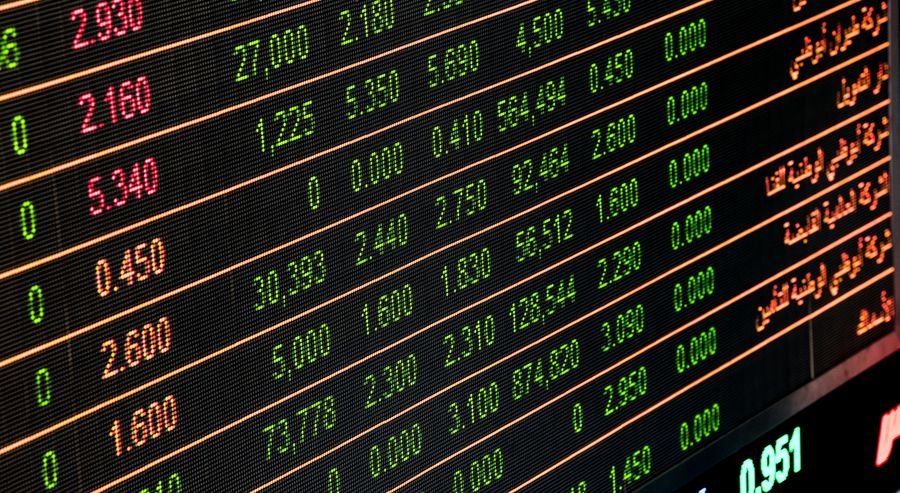
A REIT is a fund that owns income-producing property and pays most of its profit to unit holders as dividends. REITs in Nigeria let you own a share of commercial real estate without buying, titling, or managing anything yourself. Three are listed on the Nigerian Exchange. This post covers how they work, what they actually returned, what they quietly cost you, and the cases where buying land directly is the better decision.
We sell land and houses. That makes us the wrong people to ask for a neutral opinion, so we will do something more useful and be specific about which choice wins in which situation. Sometimes it is the REIT.

What a REIT actually is
A REIT is a company that buys property, collects rent, and passes the income to the people who own units in it.
You are not a landlord. You are a shareholder in a landlord. The fund holds the title, hires the managers, fixes the roofs, and chases the tenants. You hold units and receive dividends.
The structure exists because most people cannot buy an office block. Pooling lets a few thousand investors own one together. In exchange for that access, you give up every decision about the building.

How REITs work in Nigeria
Nigerian REITs are regulated by the Securities and Exchange Commission and trade on the Nigerian Exchange like ordinary shares.
The mechanism that defines them is the distribution rule. A REIT must pay out 90% or more of its taxable income to unit holders. In return, the fund is largely exempt from company income tax. The tax lands on you, not the fund, when the dividend arrives.
That rule cuts both ways. It forces income into your hands, which is the appeal. It also means the fund retains almost nothing to reinvest, so growth has to be funded by raising more money or borrowing.
Nigerian REITs are close-ended. The fund issues a fixed number of units and that is the pool. You cannot redeem your units with the fund. You sell them to another buyer on the exchange, at whatever price that buyer will pay.

The three REITs listed on the Nigerian Exchange
There are three. Not thirty, not a hundred. Three.
| REIT | Unit price (Sept 2025) | 2025 return to date | Dividend yield | Total assets (H1 2025) | |---|---|---|---|---| | SFS REIT | ₦301.55 | 68% | 7.13% | ₦3.189 billion | | Union Homes REIT | ₦57.60 | 57.4% | 8.77% | ₦11.702 billion | | UPDC REIT | ₦7.35 | 47% | 2.99% | ₦33.773 billion |
All three beat the broader NGX market, which was up 36.72% over the same period. On the face of it, 2025 was a strong year for Nigerian REITs, and the numbers above are real. You can see the current listings on the Nigerian Exchange REITs page, and the 2025 performance breakdown is documented by Nairametrics.
Now the number that matters more. Combined, these three funds hold about ₦38.742 billion in investment properties, against a total NGX equity capitalisation of ₦89.07 trillion. That puts the entire Nigerian REIT sector at roughly 0.045% of the exchange. That is not a market. That is a rounding error.
Those figures are from September 2025. Check current prices with your broker before you act on any of them.

What REITs are good at
Four things, and they are genuinely valuable.
- Liquidity. You can sell units in days. Selling a plot takes months, sometimes longer.
- Small tickets. You can start with far less than the price of any plot, at any of our estates or anyone else's.
- No management. No tenants, no repairs, no ground rent, no site visits in the rain.
- No title risk. The fund carries the documentation problem. For a market where forged papers are the single biggest way buyers lose money, that is not a small thing.
That last point deserves emphasis, because it is the one we are least comfortable making. Everything we publish tells buyers to verify title before paying. A REIT removes that burden entirely. If document fraud is what keeps you out of Nigerian property, a regulated fund is a legitimate answer.
What REITs are bad at
Three things, and they are structural rather than bad luck.
You have no control. You cannot pick the building, improve it, change the tenant, or decide when to sell the asset. You can only sell your units. One exit, not several.
The choice is three funds. Diversification is the standard argument for REITs. With three listed options in one country, concentrated in the same economy and the same currency, you are not diversified. You have picked one of three.
Thin trading. A sector at 0.045% of the exchange does not have deep order books. Liquidity is a real advantage right up to the day you need to sell a large position quickly.
Look again at the table above and you will see the range: SFS yielding 7.13% against UPDC yielding 2.99%. Those are both REITs. The label tells you almost nothing about what you are buying, so the fund matters far more than the category.

How to buy a REIT in Nigeria
Four steps.
- Open a brokerage account with a stockbroker licensed by the SEC. You will need a valid ID, a bank account, and a CSCS number, which your broker sets up.
- Read the fund's annual report before you look at the price. What does it own? Where? Who rents it? Is the dividend covered by rental income or by selling assets?
- Place the order through your broker, by the ticker, the same way you buy any share.
- Track the dividend, not the unit price. A REIT is an income instrument. If you are watching it like a growth stock, you have misunderstood what you bought.
Step two is the one people skip. A REIT's unit price tells you what the market thinks. The annual report tells you what the fund actually owns. Those are different questions.
REITs or land in Abuja: the honest comparison
Here is the comparison nobody selling either product wants to publish.
| | REIT | Land or property in Abuja | |---|---|---| | Entry cost | Price of one unit plus fees | Varies by plot and estate | | Income | 6.3% sector average dividend yield, 2025 | 6% to 10% gross rental yield in Lugbe and Gwarinpa | | Liquidity | Days | Months | | Control | None | Full | | Title risk | Carried by the fund | Yours to verify | | Running costs | Already deducted | Maintenance, ground rent, tenement rate, repairs | | Ways to win | Sell the units | Rent, improve, resell, live in it, hold |
Read the income row carefully, because it is a trap. The REIT sector average of 6.3% is what reaches your account after the fund has paid its managers, its maintenance, and its repairs. The 6% to 10% we quote on documented Abuja homes is a gross yield, before you pay any of yours.
Compare them properly and the gap narrows, sometimes to nothing. This is our long-standing position and it applies to both sides of this table: if a deal only works when you ignore the running costs, it does not work. A property returning 8% gross that costs you 3% a year to hold is returning 5%. That is worth knowing before you decide a house beats a fund.
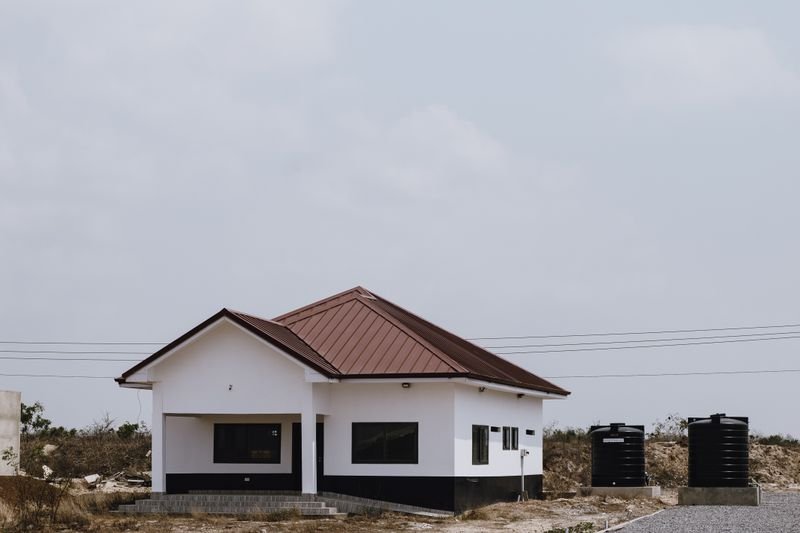
Where land pulls ahead is the last row. Our eight estates, Metro Villa in Idu, Guzape, King's Court in Kubwa, Comfort City in Kuje, Green Villa in Kuje, De-Residence, Peace City on Airport Road, and Solar City in Apo, sit in corridors where the value case is appreciation on funded infrastructure, not just rent. A REIT unit gives you one exit. A plot can be rented, improved, resold, built on, or lived in. Several exits is a strategy. One exit is a bet.
Where the REIT pulls ahead is everything else on that table. Be honest with yourself about which column you actually need.

When a REIT is the wrong choice
Skip the REIT if any of these are true.
- You want to control the asset. Units give you no say. None.
- You are counting on diversification. Three funds in one economy is not a portfolio.
- You want to build or live in something. A REIT will pay you a dividend. It will not house your family.
- You are buying it as a substitute for due diligence. If you are choosing a REIT only because verifying a title feels hard, learn the checks instead. They are not hard, they are just unfamiliar. We publish them for free.
And here is when to skip us. If you have ₦500,000 to invest, you want it liquid, and you have no interest in ever visiting a site, do not let us sell you a plot. Buy the REIT. We would rather you own the right instrument than own the wrong one from us.

How we would think about it
If you want property income and nothing else, and you want it liquid, a REIT is a reasonable answer, and the 2025 numbers were good.
If you want to own something specific, in a corridor you have driven, with a title you have checked, that you can rent now and build on later, that is land, and that is what we do. We verify every title before we list a property. We run an AGIS search to confirm the plot is allocated and free of revocation, and we confirm the seller's registration with the Corporate Affairs Commission. Our own RC number is 9023084, and you should check it rather than take our word for it.
Most people asking about REITs are really asking a simpler question: how do I get into property without getting defrauded? A REIT is one answer. Verified title is the other, and it is the one that lets you keep the upside.

Frequently asked
See the FAQ section below for short answers to the questions investors ask us most.

Still not sure? Send us a message.
Tell us your budget, your timeline, and whether you want income now or something you can build on. We will tell you honestly which fits, and if a REIT suits you better than anything we have, we will say so.
Pentagon Homes: +234 (90) 48098852. Open Monday to Saturday.
What buyers usually ask us
What are REITs in Nigeria?
A REIT, or real estate investment trust, is a fund that owns income-producing property and pays most of its profit to unit holders as dividends. You buy units on the Nigerian Exchange through a stockbroker, the same way you buy shares. You own a slice of the fund's property portfolio without holding any title yourself.
How many REITs are listed in Nigeria?
Three. SFS Real Estate Investment Trust, Union Homes REIT, and UPDC REIT. Together they held about N38.742 billion in investment properties as of the first half of 2025, which is roughly 0.045% of the total NGX equity market capitalisation. It is a very small market by any standard.
How much do you need to start investing in REITs in Nigeria?
There is no regulated minimum. Your real floor is the price of one unit plus your broker's minimum ticket and fees. As of September 2025, UPDC REIT traded around N7.35 a unit while SFS traded around N301.55, so the entry point depends heavily on which fund you pick. Confirm current prices with your broker before you budget.
Are REITs safe in Nigeria?
They are regulated by the Securities and Exchange Commission, which removes the title fraud risk you carry when buying land privately. That does not make them risk-free. Unit prices fall, dividends get cut, and a fund with three listed options gives you very little to diversify across. Regulated is not the same as guaranteed.
How are REITs taxed in Nigeria?
A REIT must distribute 90% or more of its taxable income to unit holders, and in exchange the fund itself is largely exempt from company income tax. The tax lands on you when the dividend arrives. Ask your broker or a tax adviser what applies to your situation, because the treatment has changed more than once.
Is a REIT better than buying land in Nigeria?
It depends on what you want. A REIT is better for liquidity, small tickets, and zero management. Land is better for control, appreciation in a growing corridor, and building something you can use. Compare carefully: a REIT's dividend yield is paid after the fund covers its costs, while a rental yield on a house you own is quoted before yours.